

[Event Report] PAF2025 TOKYO Presentation – “The Current Landscape of Food Photography That Captivates the World: Color Management Supporting Visual Expression”

How can a photograph truly convey the “deliciousness” of food?One key answer lies in color.
On July 11 (Fri) and 12 (Sat), 2025, PAF2025 TOKYO—a premier photography and video gear event—was held at the Tokyo Metropolitan Industrial Trade Center Hamamatsuchō Hall.The event brought together professionals and enthusiasts alike, offering hands-on experiences with the latest equipment and the opportunity to learn practical techniques from leading photographers.
At the heart of this vibrant gathering, Shoya Kubota, advertising photographer and Representative Director of the Japan Food Photographer Association, took the main stage as a featured speaker.
His seminar, titled “The Current Landscape of Food Photography That Captivates the World – Color Management Supporting Visual Expression”, went beyond product reviews and technical tips.It delved into the very core of photographic expression—what color truly means, how culture shapes visual perception, and why high-precision monitors have become indispensable in today’s creative process.


What is PAF?
— Where Tools and Creative Philosophy Intersect
PAF (Photo Accessory Fair) is a hands-on exhibition event dedicated to showcasing the tools and accessories that professionals truly rely on in the field of photography and videography.
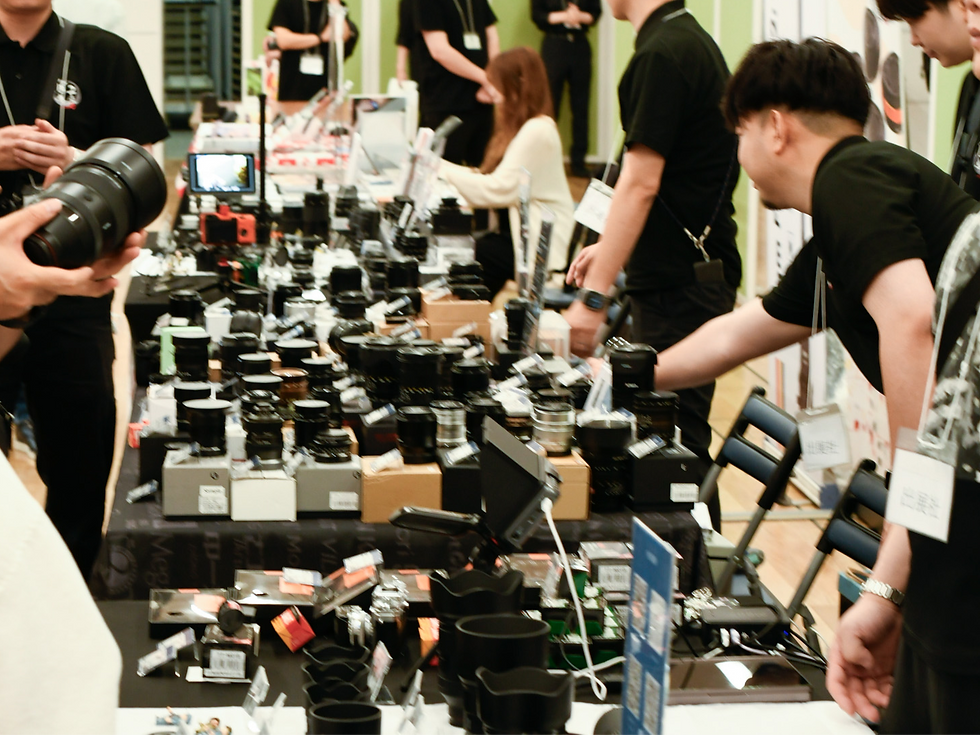
At PAF2025 TOKYO, held in Tokyo in 2025, more than 100 brands and companies gathered under one roof—featuring lighting equipment, tripods, editing tools, streaming gear, color management monitors, storage solutions, microphones, camera bags, and more.
Visitors had the opportunity to physically try out the gear, speak directly with brand representatives, and attend seminars and talks that explored not just the “how,” but the “why” behind creative workflows.It was truly an event where equipment and expression meet—a real-world intersection of tools and vision.
One of PAF’s greatest appeals is its hands-on exhibition—where visitors can try the gear for themselves and have real conversations with the people behind it.


The PAF2025 venue was far more than a conventional trade show.It was a dynamic space where creators and toolmakers could engage in direct conversation, exchanging insights rooted in real-world production.
Visitors could test lighting setups on the spot, assess color accuracy in printed outputs, adjust tripod heights to suit their needs—every corner of the venue buzzed with practical, hands-on dialogue from a creator’s perspective.
After all, photography and videography are not defined by cameras alone.They are shaped by a network of surrounding elements—light, color, sound, and data—and PAF is an event that brings all of these together into one cohesive, experience-driven environment.


The Meaning of “Delicious” Varies Across Cultures
The seminar opened with a thought-provoking question:“Is the visual language of deliciousness in food photography truly universal?”
As it turns out, the answer is no.
In Western countries, food photography often features bold contrast, vivid saturation, and dramatic lighting—elements that evoke a strong, immediate sense of appetite.By contrast, in Japan and many parts of Asia, a more restrained and delicate approach is preferred: soft lighting, generous negative space, and subtle tonal harmony.
In other words, the very perception of what looks “delicious” is shaped not only by culture and history, but also by climate, religion, and social aesthetics.
When photographers become aware of these cultural nuances, they gain the ability to express flavor in the visual language of each region—resulting in food imagery with deeper resonance and authenticity.


Color Expression in the Age of Social Media — Between Authenticity and Aesthetic Appeal
The next topic addressed was the evolution of food photography in the age of social media.With the rise of visual platforms like Instagram, TikTok, and YouTube Shorts, photographs are no longer seen simply as documents of reality.They are strategic visual tools, curated for impact, engagement, and emotion.
What kind of color grading draws clicks?How much realism should be preserved, and where does creative enhancement begin?Today’s photographers are increasingly required to make nuanced aesthetic decisions—balancing visual truth with visual appeal.
This brings us to a critical point: the importance of viewing color accurately.After all, creative judgment is only as strong as the environment in which it is made.In other words, how photographers perceive color—what they see and how they see it—ultimately determines the credibility and impact of their images.


Delivering the Photographer’s Intent — The Role of ColorEdge
In the second half of the seminar, attention turned to the technology that supports accurate color expression:EIZO’s ColorEdge series, a lineup of professional monitors trusted by creatives around the world.
📎 Learn more about ColorEdge → https://www.eizo.co.jp/products/ce/
ColorEdge monitors are equipped with features designed to ensure that a photographer’s creative intent is faithfully delivered:individually calibrated RGB channels, a wide color gamut (99% AdobeRGB, 100% sRGB), uniform brightness and color across the screen, and precisely adjusted gamma curves at the factory level.
These capabilities make ColorEdge an indispensable tool for photographers working in fields where color accuracy is non-negotiable—such as advertising and product photography.For Shoya Kubota, it is a monitor he relies on every day in his professional workflow.


“To see color accurately is to communicate powerfully.”
Based on his own experience in high-end advertising photography, Kubota shared how strict color requirements from clients—as well as discrepancies caused by inconsistent monitor environments—can often lead to costly misunderstandings.
He emphasized that in order to deliver images that clients can trust from the very first shoot, having a reliable monitor like ColorEdge is absolutely essential.
An additional presentation on the ColorEdge series was given by Mr. Fukumoto of EIZO Corporation, offering valuable insight from the manufacturer’s perspective.

A Room Filled with Focused Eyes and Purpose
The seminar venue—set for around 40 seats—was nearly full, with several attendees standing in the back throughout the session.What stood out most was the intensity of the audience’s attention: many followed along closely with cameras in hand, jotting notes or snapping shots of the presentation slides with their phones, fully immersed in every word.
Among the participants were professional food photographers, aspiring creators aiming to enter the field, food and beverage content producers, photography instructors, and enthusiasts pursuing their craft as a passion.Each approached the theme of color and expression from their own unique perspective, contributing to a rich and engaged atmosphere.
After the seminar, many attendees shared reflections such as:“This made me want to reevaluate my own editing environment.”“I’m motivated to finally study color spaces in depth.”These comments underscored just how deeply the session resonated with the audience.


In Closing
We would like to express our sincere gratitude to EIZO Corporation for their generous sponsorship,as well as to the organizers of PAF2025 TOKYO, Studio Graphics Co., Ltd., for planning and managing this exceptional event.
The day was blessed with a welcome break in the rainy season—clear skies and a refreshing breeze—a setting well suited to the spirited exchange of ideas about the future of photographic culture.
We also extend our heartfelt thanks to everyone who visited the venue,to all those who continue to support our work, and to you, the reader, for taking the time to engage with this report.
The Japan Food Photographer Association remains committed to the belief that“photography has the power to convey the beauty and richness of food.”We will continue to share that vision with the world—from Japan, outward.
Japan Food Photographer Association
Public Relations Office
Writing & Editorial Direction: Ryoko Kubota
Photography: Yusei Goto
Video Production: Ryo Ichikawa
![[Exhibition Report] 2nd FPA PROFESSIONAL FOOD PHOTOGRAPHY AWARDS Winners Exhibition](https://static.wixstatic.com/media/5a092e_f06f3d3215ef444186c97240b144b83a~mv2.jpg/v1/fill/w_980,h_653,al_c,q_85,usm_0.66_1.00_0.01,enc_avif,quality_auto/5a092e_f06f3d3215ef444186c97240b144b83a~mv2.jpg)
![[Seminar Report] Color Management Seminar for Professional Photographers – GINZA Imaging Academy Vol.1](https://static.wixstatic.com/media/5a092e_d4df2783bab7472182ccb25bd69efd48~mv2.jpg/v1/fill/w_980,h_653,al_c,q_85,usm_0.66_1.00_0.01,enc_avif,quality_auto/5a092e_d4df2783bab7472182ccb25bd69efd48~mv2.jpg)
![[Exhibition Report] Winning Works from the 1st FPA Professional Food Photography Awards](https://static.wixstatic.com/media/5a092e_91e51011ccff408d8314ce12e998fcc1~mv2.jpg/v1/fill/w_980,h_735,al_c,q_85,usm_0.66_1.00_0.01,enc_avif,quality_auto/5a092e_91e51011ccff408d8314ce12e998fcc1~mv2.jpg)
Comments